
OR-PU90-69-1x5-8-RB94370
O-ring 69.1×5.8 PU 90 Shore A
This PU polyurethane O-ring delivers top-tier abrasion resistance — the first choice for hydraulic rod seals and high-cycle applications.
- SKU
- OR-PU90-69-1x5-8-RB94370
- Article number
- 94370
- Dimensions
- 69.1 × 5.8 mm
- Material
- PU · 90 Sh A
excl. VAT
From €4.55
€5.60 incl. VAT
Minimum order is €5.00 excl. VAT. Below that you pay the difference as a top-up — add more pieces and you'll avoid it.
Available to order — approx. 5 days
Add 9 more pieces — from 10 pcs the price is €4.09 per piece, ex. VAT.
Need a price for a larger volume?
PU O-ring 69.1 × 5.8 mm (inner diameter 69.1 mm, cross-section 5.8 mm). Outer diameter 80.7 mm. Hardness 90 Sh A. Temperature range -40 °C to 80 °C. Standard ISO3601-69.1x5.8.
- Inner diameter (ID)
- 69.1 mm
- Cross-section (CS)
- 5.8 mm
- Outer diameter (OD)
- 80.7 mm
- Dimensions
- 69.1x5.8
- Material
- PU
- Hardness
- 90 Sh A
- Colour
- amber
- Temperature range
- -40 °C to 80 °C
- Standard code
- ISO3601-69.1x5.8
- ISO 3601 size
- 69.1x5.8
- SKU
- OR-PU90-69-1x5-8-RB94370
- Country of origin
- Germany
- Availability
- On demand
Technical specifications
| Product data | |
|---|---|
| Material | PU |
| Hardness (Shore A) | 90 Sh A |
| Color | amber |
| Certifications | No specific certifications |
| Indicative values for PU | |
| Temperature range | -40 °C to 80 °C |
| Tensile strength | 35 MPa |
| Ultimate elongation | 450 % |
| Compression set | 25 % |
| Specific gravity | 1.25 g/cm³ |
These values apply to the PU material family as a whole, not to this specific size and hardness. Always verify suitability for your specific application before use.
Cross-standard size references
- Standard code
- ISO3601-69.1x5.8
- ISO 3601
- 69.1x5.8
- DIN 3771
- 69.1x5.8
Material properties
Polyurethane (PU) is a thermoplastic elastomer with the highest abrasion resistance of all elastomers. It combines high tensile strength (typically 35 MPa), good resistance to mineral oils, cold water and lubricants. Operating temperature range is limited: -40 °C to +80 °C (short-term +100 °C). The main limitation is hydrolysis on contact with hot water or steam — PU must not be used there. Typical hardness 85-95 Shore A for dynamic sealing applications with high pressure loads.
- Material
- PU
- Chemical name
- Polyurethane Rubber
- Material grade
- Polyuretán, PUR, Urethane
- Trade names
- Covestro Vulkollan, Lanxess Adiprene, Era Polymers
Suitable for various industries
PU O-rings are used in hydraulic presses, construction and mining equipment, pneumatic cylinders with high cycle loads, and in abrasive environments (slurry, sand). Typical areas: rod seals, wipers, slide bands, shaft covers in high-pressure environments.
Application notes
Ideal for hydraulic rod seals and high-cycle applications with mineral oil. Do not use above +80 °C or with hot water / steam — material hydrolysis.
Advantages
- Highest abrasion resistance of any elastomer
- High tensile strength (≈35 MPa)
- Resistant to mineral oils and HLP hydraulic fluids
- Suitable for high pressures (up to 40 MPa static)
- First choice for rod and piston seals
Price tiers
| When buying | per piece |
|---|---|
| from 1 pcs | €4.55 |
| from 10 pcs −10.1% | €4.09 |
| from 100 pcs −25.1% | €3.41 |
| from 1000 pcs −35.2% | €2.95 |
Prices exclude VAT. The volume discount is applied automatically in the cart.
Documentation
Related products
Equivalents, alternative materials, and cross-references.
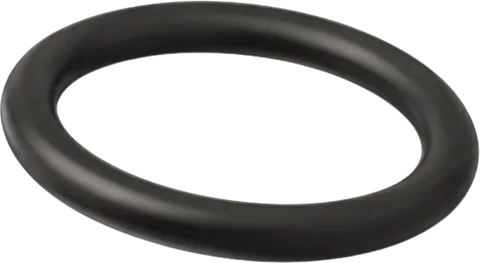
O-ring 69.1×5.8 NBR 70 Shore A
- Dimensions
- 69.1 × 5.8 mm · OD 80.7 mm
- Material
- NBR · 70 ShA
SKU OR-NBR70-69-1x5-8-MS
€0.67excl. VAT
O-ring 69.1×5.8 NBR 80 Shore A
- Dimensions
- 69.1 × 5.8 mm · OD 80.7 mm
- Material
- NBR · 80 ShA
SKU OR-NBR80-69-1x5-8-RB38259
€1.75excl. VAT
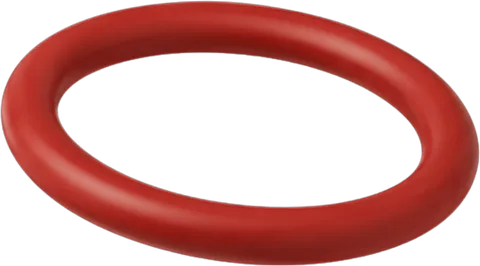
O-ring 69.1×5.8 VMQ 60 Shore A
- Dimensions
- 69.1 × 5.8 mm · OD 80.7 mm
- Material
- VMQ · 60 ShA
SKU OR-VMQ60-69-1x5-8-RB38418
€2.66excl. VAT
O-ring 69.1×5.8 VMQ 70 Shore A
- Dimensions
- 69.1 × 5.8 mm · OD 80.7 mm
- Material
- VMQ · 70 ShA
SKU OR-VMQ70-69-1x5-8-MS
€2.23excl. VAT