NBR (Nitrile) O-rings
-30 °C to 100 °C
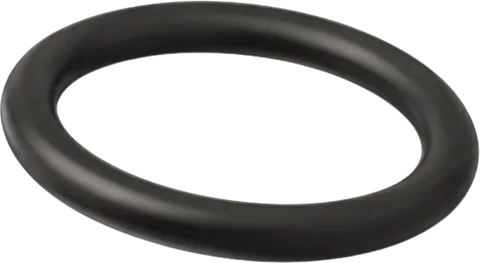
NBR (Nitrile Butadiene Rubber) is the most widespread elastomer for O-rings. Excellent resistance to mineral oils, fuels, and hydraulic fluids. An economical choice for most standard applications.
Products
3,736 products
- In stock
O-ring 10.3×2.4 NBR 70 Shore A
- Dimensions
- 10.3 × 2.4 mm · OD 15.1 mm
- Material
- NBR · 70 ShA
SKU OR-NBR70-10-3x2-4-RB50127
€0.17excl. VAT
- In stock
O-ring 10.5×1.5 NBR 70 Shore A
- Dimensions
- 10.5 × 1.5 mm · OD 13.5 mm
- Material
- NBR · 70 ShA
SKU OR-NBR70-10-5x1-5-RB51298
€0.17excl. VAT
- In stock
O-ring 10.6×2.3 NBR 70 Shore A
- Dimensions
- 10.6 × 2.3 mm · OD 15.2 mm
- Material
- NBR · 70 ShA
SKU OR-NBR70-10-6x2-3-MS
€0.22excl. VAT
- In stock
O-ring 10.78×2.62 NBR 70 Shore A
- Dimensions
- 10.78 × 2.62 mm · OD 16.02 mm
- Material
- NBR · 70 ShA
SKU OR-NBR70-10-78x2-62-RB50128
€0.17excl. VAT
- In stock
O-ring 10.82×1.78 NBR 70 Shore A
- Dimensions
- 10.82 × 1.78 mm · OD 14.38 mm
- Material
- NBR · 70 ShA
SKU OR-NBR70-10-82x1-78-RB50129
€0.32excl. VAT
- In stock
O-ring 100×2.5 NBR 70 Shore A
- Dimensions
- 100 × 2.5 mm · OD 105 mm
- Material
- NBR · 70 ShA
SKU OR-NBR70-100x2-5-RB50707
€0.39excl. VAT
- In stock
O-ring 100×2 NBR 70 Shore A
- Dimensions
- 100 × 2 mm · OD 104 mm
- Material
- NBR · 70 ShA
SKU OR-NBR70-100x2-RB50706
€0.31excl. VAT
- In stock
O-ring 100×3.5 NBR 70 Shore A
- Dimensions
- 100 × 3.5 mm · OD 107 mm
- Material
- NBR · 70 ShA
SKU OR-NBR70-100x3-5-RB50709
€0.47excl. VAT
- In stock
O-ring 100×3 NBR 70 Shore A
- Dimensions
- 100 × 3 mm · OD 106 mm
- Material
- NBR · 70 ShA
SKU OR-NBR70-100x3-RB50708
€0.36excl. VAT
- In stock
O-ring 100×4 NBR 70 Shore A
- Dimensions
- 100 × 4 mm · OD 108 mm
- Material
- NBR · 70 ShA
SKU OR-NBR70-100x4-RB50710
€0.74excl. VAT
- In stock
O-ring 100×5.3 NBR 70 Shore A
- Dimensions
- 100 × 5.3 mm · OD 110.6 mm
- Material
- NBR · 70 ShA
SKU OR-NBR70-100x5-3-MS
€0.83excl. VAT
- In stock
O-ring 100×5 NBR 70 Shore A
- Dimensions
- 100 × 5 mm · OD 110 mm
- Material
- NBR · 70 ShA
SKU OR-NBR70-100x5-RB50711
€1.13excl. VAT
- In stock
O-ring 100×6 NBR 70 Shore A
- Dimensions
- 100 × 6 mm · OD 112 mm
- Material
- NBR · 70 ShA
SKU OR-NBR70-100x6-RB51201
€1.31excl. VAT
- In stock
O-ring 101.27×2.62 NBR 70 Shore A
- Dimensions
- 101.27 × 2.62 mm · OD 106.51 mm
- Material
- NBR · 70 ShA
SKU OR-NBR70-101-27x2-62-RB50714
€0.33excl. VAT
- In stock
O-ring 101.34×1.78 NBR 70 Shore A
- Dimensions
- 101.34 × 1.78 mm · OD 104.9 mm
- Material
- NBR · 70 ShA
SKU OR-NBR70-101-34x1-78-RB50715
€0.33excl. VAT
- In stock
O-ring 104.14×6.99 NBR 70 Shore A
- Dimensions
- 104.14 × 6.99 mm · OD 118.12 mm
- Material
- NBR · 70 ShA
SKU OR-NBR70-104-14x6-99-RB52118
€1.60excl. VAT
- In stock
O-ring 104.1×5.8 NBR 70 Shore A
- Dimensions
- 104.1 × 5.8 mm · OD 115.7 mm
- Material
- NBR · 70 ShA
SKU OR-NBR70-104-1x5-8-MS
€0.83excl. VAT
- In stock
O-ring 104.37×3.53 NBR 70 Shore A
- Dimensions
- 104.37 × 3.53 mm · OD 111.43 mm
- Material
- NBR · 70 ShA
SKU OR-NBR70-104-37x3-53-RB50720
€0.99excl. VAT
- In stock
O-ring 105×2.5 NBR 70 Shore A
- Dimensions
- 105 × 2.5 mm · OD 110 mm
- Material
- NBR · 70 ShA
SKU OR-NBR70-105x2-5-RB50722
€0.33excl. VAT
- In stock
O-ring 105×2 NBR 70 Shore A
- Dimensions
- 105 × 2 mm · OD 109 mm
- Material
- NBR · 70 ShA
SKU OR-NBR70-105x2-RB51207
€0.38excl. VAT
- In stock
O-ring 105×3.5 NBR 70 Shore A
- Dimensions
- 105 × 3.5 mm · OD 112 mm
- Material
- NBR · 70 ShA
SKU OR-NBR70-105x3-5-RB51208
€0.83excl. VAT
- In stock
O-ring 105×3 NBR 70 Shore A
- Dimensions
- 105 × 3 mm · OD 111 mm
- Material
- NBR · 70 ShA
SKU OR-NBR70-105x3-RB52393
€0.70excl. VAT
- In stock
O-ring 105×4 NBR 70 Shore A
- Dimensions
- 105 × 4 mm · OD 113 mm
- Material
- NBR · 70 ShA
SKU OR-NBR70-105x4-RB51209
€0.67excl. VAT
- In stock
O-ring 105×5 NBR 70 Shore A
- Dimensions
- 105 × 5 mm · OD 115 mm
- Material
- NBR · 70 ShA
SKU OR-NBR70-105x5-RB50723
€0.71excl. VAT
Temperature and chemical compatibility
Temperature and chemical compatibility
Temperature range: -30 °C to +100 °C (short-term up to +120 °C).
Featured products
Typical applications: hydraulic cylinders, pneumatic systems, pumps, gearboxes, fuel pumps, automotive industry, general engineering.
NBR (Nitrile)
Each elastomer has different mechanical and chemical properties.
NBR (Nitrile) — properties and applications
NBR (nitrile rubber) is the most widely used and most affordable material for O-rings — for most engineering operations it is the standard first choice, with a reference price of 1×. It works in a temperature range of −30 to +100 °C (briefly up to +120 °C) and its typical hardness is 70 ShA, which makes it a universal sealing element for ordinary conditions. It's a reliable workhorse that covers the vast majority of standard seals without any needless overpaying.
NBR shows its strength with petroleum-based substances: it has excellent resistance to mineral oils, hydraulic fluids and fuels (petrol, diesel), and it copes well with water and air too. This is precisely why NBR O-rings are the go-to choice in hydraulics, pneumatics, fuel and oil systems, and general engineering. Its properties depend on the acrylonitrile (ACN) content: a higher proportion improves oil resistance, while a lower one improves flexibility at low temperatures — so for a specific application we select a tailored compound.
It does, however, have clear limits. Don't use NBR for steam and hot water, glycol-based brake fluids (DOT 3/4), ester and synthetic oils, polar solvents, or strong acids and bases. Watch out for ozone, UV and weathering too: in direct sunlight NBR ages and cracks, so it isn't ideal for a permanently outdoor environment. These limitations determine the service life of the seal — with an aggressive medium, don't experiment; choose a more suitable material instead.
Compared with the other materials, NBR is clearly the best price-to-performance ratio for oil and fuel applications at moderate temperatures. When you need a higher temperature or better wear resistance, step up to HNBR; when aggressive chemistry or high heat come into play, to FKM (Viton®); for water and steam, to EPDM. The conclusion is simple: if you're sealing mineral oil, hydraulics or fuel in the −30 to +100 °C range and want a proven O-ring at the best price, reach for NBR — and save the other materials for the cases where NBR runs up against its limits.
Browse all O-rings across every material.
O-ring material comparison
Indicative values for a quick comparison. Temperature ranges are conservative (continuous service); for a specific medium always verify compatibility or consult a technician.
| Material | Temperature range | Mineral oil | Water | Acid | Fuel | Hardness (Sh A) | Relative price (vs NBR) |
|---|---|---|---|---|---|---|---|
| NBR — your selection | -30 – 100 °C | Excellent | Limited | Avoid | Excellent | 70 Sh A | 1.0× |
| HNBR | -30 – 150 °C | Excellent | Limited | Avoid | Excellent | 75 Sh A | 3.0× |
| FKM | -20 – 200 °C | Excellent | Limited | Excellent | Excellent | 75 Sh A | 5.0× |
| FFKM | -20 – 260 °C | Excellent | Excellent | Excellent | Excellent | 75 Sh A | 50.0× |
| EPDM | -40 – 130 °C | Unsafe | Excellent | Excellent | Unsafe | 70 Sh A | 1.2× |
| VMQ | -60 – 200 °C | Avoid | Excellent | Avoid | Avoid | 70 Sh A | 3.5× |
| PU | -40 – 80 °C | Excellent | Limited | Avoid | Limited | 90 Sh A | 2.0× |