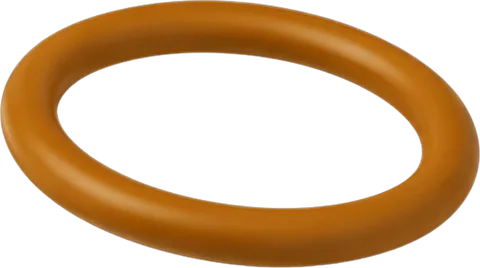
PU (Polyurethane) O-rings
-40 °C to 80 °C
Polyurethane O-rings offer excellent mechanical resistance, wear and abrasion resistance. Ideal for dynamic high-pressure hydraulic applications.
Products
97 products
- In stock
O-ring 10.6×2.3 PU 90 Shore A
- Dimensions
- 10.6 × 2.3 mm · OD 15.2 mm
- Material
- PU · 90 ShA
SKU OR-PU90-10-6x2-3-RB94060
€1.14excl. VAT
- In stock
O-ring 104.1×5.8 PU 90 Shore A
- Dimensions
- 104.1 × 5.8 mm · OD 115.7 mm
- Material
- PU · 90 ShA
SKU OR-PU90-104-1x5-8-RB94440
€2.98excl. VAT
- In stock
O-ring 10×2 PU 90 Shore A
- Dimensions
- 10 × 2 mm · OD 14 mm
- Material
- PU · 90 ShA
SKU OR-PU90-10x2-RB96020
€3.23excl. VAT
- In stock
O-ring 11.6×2.3 PU 90 Shore A
- Dimensions
- 11.6 × 2.3 mm · OD 16.2 mm
- Material
- PU · 90 ShA
SKU OR-PU90-11-6x2-3-RB94070
€0.67excl. VAT
- In stock
O-ring 113.7×8.6 PU 90 Shore A
- Dimensions
- 113.7 × 8.6 mm · OD 130.9 mm
- Material
- PU · 90 ShA
SKU OR-PU90-113-7x8-6-RB94470
€4.60excl. VAT
- In stock
O-ring 13.6×2.3 PU 90 Shore A
- Dimensions
- 13.6 × 2.3 mm · OD 18.2 mm
- Material
- PU · 90 ShA
SKU OR-PU90-13-6x2-3-RB94080
€0.67excl. VAT
- In stock
O-ring 16×2 PU 90 Shore A
- Dimensions
- 16 × 2 mm · OD 20 mm
- Material
- PU · 90 ShA
SKU OR-PU90-16x2-RB96050
€0.67excl. VAT
- In stock
O-ring 17.6×2.3 PU 90 Shore A
- Dimensions
- 17.6 × 2.3 mm · OD 22.2 mm
- Material
- PU · 90 ShA
SKU OR-PU90-17-6x2-3-RB94110
€1.50excl. VAT
- In stock
O-ring 18×2 PU 90 Shore A
- Dimensions
- 18 × 2 mm · OD 22 mm
- Material
- PU · 90 ShA
SKU OR-PU90-18x2-RB96060
€0.17excl. VAT
- In stock
O-ring 19.3×4.6 PU 90 Shore A
- Dimensions
- 19.3 × 4.6 mm · OD 28.5 mm
- Material
- PU · 90 ShA
SKU OR-PU90-19-3x4-6-RB94140
€1.25excl. VAT
- In stock
O-ring 19.6×2.3 PU 90 Shore A
- Dimensions
- 19.6 × 2.3 mm · OD 24.2 mm
- Material
- PU · 90 ShA
SKU OR-PU90-19-6x2-3-RB94120
€1.59excl. VAT
- In stock
O-ring 20.6×2.3 PU 90 Shore A
- Dimensions
- 20.6 × 2.3 mm · OD 25.2 mm
- Material
- PU · 90 ShA
SKU OR-PU90-20-6x2-3-RB94130
€1.93excl. VAT
- In stock
O-ring 20×2 PU 90 Shore A
- Dimensions
- 20 × 2 mm · OD 24 mm
- Material
- PU · 90 ShA
SKU OR-PU90-20x2-RB96070
€0.83excl. VAT
- In stock
O-ring 21.3×4.6 PU 90 Shore A
- Dimensions
- 21.3 × 4.6 mm · OD 30.5 mm
- Material
- PU · 90 ShA
SKU OR-PU90-21-3x4-6-MS
€0.67excl. VAT
- In stock
O-ring 22×2 PU 90 Shore A
- Dimensions
- 22 × 2 mm · OD 26 mm
- Material
- PU · 90 ShA
SKU OR-PU90-22x2-RB96080
€0.83excl. VAT
- In stock
O-ring 23.3×4.6 PU 90 Shore A
- Dimensions
- 23.3 × 4.6 mm · OD 32.5 mm
- Material
- PU · 90 ShA
SKU OR-PU90-23-3x4-6-RB94160
€1.98excl. VAT
- In stock
O-ring 25×1 PU 90 Shore A
- Dimensions
- 25 × 1 mm · OD 27 mm
- Material
- PU · 90 ShA
SKU OR-PU90-25x1-MS
€0.94excl. VAT
- In stock
O-ring 25×2 PU 90 Shore A
- Dimensions
- 25 × 2 mm · OD 29 mm
- Material
- PU · 90 ShA
SKU OR-PU90-25x2-RB96090
€1.41excl. VAT
- In stock
O-ring 28×2 PU 90 Shore A
- Dimensions
- 28 × 2 mm · OD 32 mm
- Material
- PU · 90 ShA
SKU OR-PU90-28x2-RB96110
€1.42excl. VAT
- In stock
O-ring 30×2 PU 90 Shore A
- Dimensions
- 30 × 2 mm · OD 34 mm
- Material
- PU · 90 ShA
SKU OR-PU90-30x2-RB96120
€1.25excl. VAT
- In stock
O-ring 31.3×4.6 PU 90 Shore A
- Dimensions
- 31.3 × 4.6 mm · OD 40.5 mm
- Material
- PU · 90 ShA
SKU OR-PU90-31-3x4-6-RB94210
€2.08excl. VAT
- In stock
O-ring 32×1.1 PU 90 Shore A
- Dimensions
- 32 × 1.1 mm · OD 34.2 mm
- Material
- PU · 90 ShA
SKU OR-PU90-32x1-1-MS
€1.85excl. VAT
- In stock
O-ring 32×2 PU 90 Shore A
- Dimensions
- 32 × 2 mm · OD 36 mm
- Material
- PU · 90 ShA
SKU OR-PU90-32x2-RB96130
€2.11excl. VAT
- In stock
O-ring 39.1×5.8 PU 90 Shore A
- Dimensions
- 39.1 × 5.8 mm · OD 50.7 mm
- Material
- PU · 90 ShA
SKU OR-PU90-39-1x5-8-RB94260
€2.90excl. VAT
Temperature and chemical compatibility
Temperature and chemical compatibility
Temperature range: -40 °C to +80 °C (short-term up to +100 °C).
Featured products
Typical applications: high-pressure hydraulics, pneumatics, abrasive environments, mining and construction machines, pistons and rods.
PU (Polyurethane)
Each elastomer has different mechanical and chemical properties.
PU (Polyurethane) — properties and applications
Polyurethane (PU) is a harder, mechanically resistant elastomer that differs from ordinary sealing materials above all in its strength. PU O-rings have a hardness of typically 90 ShA — that is, they're harder than ordinary elastomers — and they're distinguished by exceptional resistance to wear, abrasion and tearing. As a result they withstand high pressures and suit situations where the seal is exposed to constant mechanical stress. The operating temperature of PU O-rings is −40 to +80 °C (briefly up to +100 °C).
The material offers excellent resistance to mineral oils and hydraulic fluids and copes well with cold water and fuels. PU's biggest strength, though, is its mechanical strength: resistance to being extruded from the groove (extrusion) is significantly higher than with ordinary rubbers, so at high pressures it often replaces the combination of a soft O-ring with a back-up ring. This is precisely why polyurethane is at home in dynamic hydraulics and piston seals.
Watch its limits, though. Polyurethane isn't suitable for hot water and steam (hydrolysis and breakdown of the material occur), for temperatures above +80 °C, or for acids and bases. When choosing a material, therefore, always consider which media and temperatures the O-ring will actually be exposed to — this is exactly where it's decided whether PU is the right choice. If your operation exceeds the temperature ceiling or works with steam or aggressive chemistry, reach for a different material (NBR or FKM, depending on the medium and temperature).
Typical uses of PU O-rings are high-pressure hydraulics, dynamic and piston seals, and applications with mechanical stress and abrasion where ordinary elastomers wear out faster — typically mining, construction and materials-handling machinery. Compared with the other materials, PU is a specialist in pressure and abrasion, not in chemistry and temperature. If pressure and wear resistance are what matter most in your application — and you're not working with hot water, steam or aggressive chemicals — reach for polyurethane O-rings.
Browse all O-rings across every material.
O-ring material comparison
Indicative values for a quick comparison. Temperature ranges are conservative (continuous service); for a specific medium always verify compatibility or consult a technician.
| Material | Temperature range | Mineral oil | Water | Acid | Fuel | Hardness (Sh A) | Relative price (vs NBR) |
|---|---|---|---|---|---|---|---|
| NBR | -30 – 100 °C | Excellent | Limited | Avoid | Excellent | 70 Sh A | 1.0× |
| HNBR | -30 – 150 °C | Excellent | Limited | Avoid | Excellent | 75 Sh A | 3.0× |
| FKM | -20 – 200 °C | Excellent | Limited | Excellent | Excellent | 75 Sh A | 5.0× |
| FFKM | -20 – 260 °C | Excellent | Excellent | Excellent | Excellent | 75 Sh A | 50.0× |
| EPDM | -40 – 130 °C | Unsafe | Excellent | Excellent | Unsafe | 70 Sh A | 1.2× |
| VMQ | -60 – 200 °C | Avoid | Excellent | Avoid | Avoid | 70 Sh A | 3.5× |
| PU — your selection | -40 – 80 °C | Excellent | Limited | Avoid | Limited | 90 Sh A | 2.0× |