EPDM O-rings
-40 °C to 130 °C
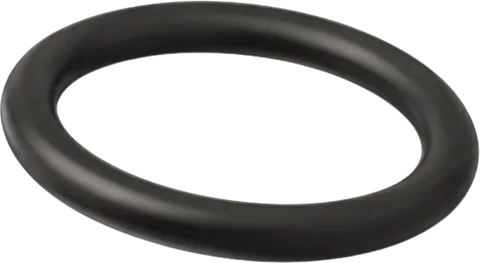
EPDM (Ethylene Propylene Diene Monomer) is an elastomer with excellent resistance to water, steam, acids, alkalis, and atmospheric effects. Not compatible with mineral oils.
Products
511 products
- In stock
O-ring 10.52×1.8 EPDM 70 Shore A
- Dimensions
- 10.52 × 1.8 mm · OD 14.12 mm
- Material
- EPDM · 70 ShA
SKU OR-EPDM70-10-52x1-8-MS
€0.10excl. VAT
- In stock
O-ring 13.8×2.4 EPDM 70 Shore A
- Dimensions
- 13.8 × 2.4 mm · OD 18.6 mm
- Material
- EPDM · 70 ShA
SKU OR-EPDM70-13-8x2-4-MS
€0.67excl. VAT
- In stock
O-ring 14×2.3 EPDM 70 Shore A
- Dimensions
- 14 × 2.3 mm · OD 18.6 mm
- Material
- EPDM · 70 ShA
SKU OR-EPDM70-14x2-3-MS
€0.28excl. VAT
- In stock
O-ring 14×2 EPDM 70 Shore A
- Dimensions
- 14 × 2 mm · OD 18 mm
- Material
- EPDM · 70 ShA
SKU OR-EPDM70-14x2-RB53028
€0.17excl. VAT
- In stock
O-ring 17.5×2.4 EPDM 70 Shore A
- Dimensions
- 17.5 × 2.4 mm · OD 22.3 mm
- Material
- EPDM · 70 ShA
SKU OR-EPDM70-17-5x2-4-MS
€0.06excl. VAT
- In stock
O-ring 18.77×1.78 EPDM 70 Shore A
- Dimensions
- 18.77 × 1.78 mm · OD 22.33 mm
- Material
- EPDM · 70 ShA
SKU OR-EPDM70-18-77x1-78-RB53151
€0.30excl. VAT
- In stock
O-ring 19.3×2.4 EPDM 70 Shore A
- Dimensions
- 19.3 × 2.4 mm · OD 24.1 mm
- Material
- EPDM · 70 ShA
SKU OR-EPDM70-19-3x2-4-MS
€0.17excl. VAT
- In stock
O-ring 21.5×3.6 EPDM 70 Shore A
- Dimensions
- 21.5 × 3.6 mm · OD 28.7 mm
- Material
- EPDM · 70 ShA
SKU OR-EPDM70-21-5x3-6-MS
€0.10excl. VAT
- In stock
O-ring 21.95×1.78 EPDM 70 Shore A
- Dimensions
- 21.95 × 1.78 mm · OD 25.51 mm
- Material
- EPDM · 70 ShA
SKU OR-EPDM70-21-95x1-78-RB53174
€0.17excl. VAT
- In stock
O-ring 22×2.62 EPDM 70 Shore A
- Dimensions
- 22 × 2.62 mm · OD 27.24 mm
- Material
- EPDM · 70 ShA
SKU OR-EPDM70-22x2-62-MS
€0.08excl. VAT
- In stock
O-ring 23.47×2.62 EPDM 70 Shore A
- Dimensions
- 23.47 × 2.62 mm · OD 28.71 mm
- Material
- EPDM · 70 ShA
SKU OR-EPDM70-23-47x2-62-RB53184
€0.10excl. VAT
- In stock
O-ring 24×3 EPDM 70 Shore A
- Dimensions
- 24 × 3 mm · OD 30 mm
- Material
- EPDM · 70 ShA
SKU OR-EPDM70-24x3-RB53017
€0.17excl. VAT
- In stock
O-ring 28×3 EPDM 70 Shore A
- Dimensions
- 28 × 3 mm · OD 34 mm
- Material
- EPDM · 70 ShA
SKU OR-EPDM70-28x3-RB53210
€0.21excl. VAT
- In stock
O-ring 29.2×3 EPDM 70 Shore A
- Dimensions
- 29.2 × 3 mm · OD 35.2 mm
- Material
- EPDM · 70 ShA
SKU OR-EPDM70-29-2x3-MS
€0.50excl. VAT
- In stock
O-ring 35×2 EPDM 70 Shore A
- Dimensions
- 35 × 2 mm · OD 39 mm
- Material
- EPDM · 70 ShA
SKU OR-EPDM70-35x2-RB53246
€0.21excl. VAT
- In stock
O-ring 45×3.55 EPDM 70 Shore A
- Dimensions
- 45 × 3.55 mm · OD 52.1 mm
- Material
- EPDM · 70 ShA
SKU OR-EPDM70-45x3-55-MS
€0.37excl. VAT
- In stock
O-ring 46×3.5 EPDM 70 Shore A
- Dimensions
- 46 × 3.5 mm · OD 53 mm
- Material
- EPDM · 70 ShA
SKU OR-EPDM70-46x3-5-MS
€0.42excl. VAT
- In stock
O-ring 51×3 EPDM 70 Shore A
- Dimensions
- 51 × 3 mm · OD 57 mm
- Material
- EPDM · 70 ShA
SKU OR-EPDM70-51x3-MS
€0.16excl. VAT
- In stock
O-ring 58×6 EPDM 70 Shore A
- Dimensions
- 58 × 6 mm · OD 70 mm
- Material
- EPDM · 70 ShA
SKU OR-EPDM70-58x6-MS
€0.83excl. VAT
- In stock
O-ring 6×2 EPDM 70 Shore A
- Dimensions
- 6 × 2 mm · OD 10 mm
- Material
- EPDM · 70 ShA
SKU OR-EPDM70-6x2-RB53003
€0.18excl. VAT
- In stock
O-ring 75×7 EPDM 70 Shore A
- Dimensions
- 75 × 7 mm · OD 89 mm
- Material
- EPDM · 70 ShA
SKU OR-EPDM70-75x7-MS
€2.22excl. VAT
- In stock
O-ring 139.3×3.53 EPDM 70 Shore A
- Dimensions
- 139.3 × 3.53 mm · OD 146.36 mm
- Material
- EPDM · 70 ShA
SKU OR-EPDM70-139-3x3-53-MS
€3.75excl. VAT
- In stock
O-ring 110.72×3.53 EPDM 80 Shore A
- Dimensions
- 110.72 × 3.53 mm · OD 117.78 mm
- Material
- EPDM · 80 ShA
SKU OR-EPDM80-110-72x3-53-MS
€3.75excl. VAT
- In stock
O-ring 78.97×3.53 EPDM 80 Shore A
- Dimensions
- 78.97 × 3.53 mm · OD 86.03 mm
- Material
- EPDM · 80 ShA
SKU OR-EPDM80-78-97x3-53-MS
€0.55excl. VAT
Temperature and chemical compatibility
Temperature and chemical compatibility
Temperature range: -40 °C to +130 °C (short-term up to +150 °C).
Featured products
Typical applications: drinking water (with a suitably certified compound), steam systems, acids and alkalis, refrigeration, HVAC, brake systems (DOT 3/4).
EPDM
Each elastomer has different mechanical and chemical properties.
EPDM — properties and applications
EPDM (ethylene-propylene-diene monomer) is an elastomer intended above all for water, steam and the outdoors. It's a material that copes where ordinary O-rings made from other rubbers age quickly — it excels in resistance to ozone, UV radiation and weathering. The typical hardness of EPDM O-rings is 70 ShA and the working temperature range is −40 to +130 °C (briefly up to +150 °C), so it covers most sanitary and heating applications.
It resists water and water vapour, glycol-based brake fluids (DOT 3/4), ozone, UV and weathering, as well as many acids and bases and polar solvents, extremely well. This is precisely why EPDM is the natural choice wherever NBR fails on ozone and weathering, and where you're working with water and steam media. Food-safe EPDM compounds are also used in contact with drinking water — what's decisive, though, is whether the specific compound carries the relevant certification.
EPDM's biggest limitation is clear and unchanging: it isn't suitable for mineral oils, fuels and petroleum-based lubricants. In them it swells and degrades, so never deploy it in oils or fuels — that's the most common mistake in material selection. It's likewise unsuitable for mineral brake fluids (LHM); it only applies to glycol-based DOT. For oil applications, reach for NBR or FKM.
Typical uses of EPDM O-rings are found in water and steam circuits, in sanitary and heating (HVAC) systems, in cooling and air-conditioning lines, in glycol-based brake systems, and in outdoor seals exposed to the weather. It also sees use in solar and photovoltaic installations, where long-term resistance to UV and ozone is key. Compared with NBR it's similar in price but with the opposite media profile: where NBR excels (oils), EPDM fails, and vice versa. Choose EPDM for water and steam, DOT brake fluids and anywhere NBR isn't enough on ozone and UV — but never in oils or fuels.
Browse all O-rings across every material.
O-ring material comparison
Indicative values for a quick comparison. Temperature ranges are conservative (continuous service); for a specific medium always verify compatibility or consult a technician.
| Material | Temperature range | Mineral oil | Water | Acid | Fuel | Hardness (Sh A) | Relative price (vs NBR) |
|---|---|---|---|---|---|---|---|
| NBR | -30 – 100 °C | Excellent | Limited | Avoid | Excellent | 70 Sh A | 1.0× |
| HNBR | -30 – 150 °C | Excellent | Limited | Avoid | Excellent | 75 Sh A | 3.0× |
| FKM | -20 – 200 °C | Excellent | Limited | Excellent | Excellent | 75 Sh A | 5.0× |
| FFKM | -20 – 260 °C | Excellent | Excellent | Excellent | Excellent | 75 Sh A | 50.0× |
| EPDM — your selection | -40 – 130 °C | Unsafe | Excellent | Excellent | Unsafe | 70 Sh A | 1.2× |
| VMQ | -60 – 200 °C | Avoid | Excellent | Avoid | Avoid | 70 Sh A | 3.5× |
| PU | -40 – 80 °C | Excellent | Limited | Avoid | Limited | 90 Sh A | 2.0× |